


Most Dallas-Fort Worth homeowners never think about their attic — until something goes wrong. A skyrocketing electric bill in July. Shingles that age out years ahead of schedule. A roof that fails not from the outside, but from underneath. In nearly every one of these cases, the root cause is the same: poor attic ventilation.
Attic ventilation is one of the most misunderstood and most overlooked components of a healthy home in the DFW area. It's not glamorous, but it is absolutely critical — especially in a climate like North Texas, where summer attic temperatures can exceed 150 degrees Fahrenheit and where improper ventilation silently destroys roofs, spikes energy bills, and creates moisture problems that spread through an entire home.
This guide breaks down everything DFW homeowners need to know about attic ventilation — why it matters, what happens when it fails, and how TM Roofing & Construction Group can help you protect your home.
In most parts of the country, attic ventilation is important. In Dallas-Fort Worth, it's essential.
Here's why: North Texas summers are relentless. Triple-digit temperatures are the norm from June through September, and the sun beats down on DFW rooftops with intense, sustained heat. Without proper attic ventilation, that heat has nowhere to go. It builds up inside your attic, hour after hour, day after day — until your attic becomes a superheated chamber that damages everything it touches.
Attic temperatures in poorly ventilated DFW homes can exceed 150 to 160 degrees Fahrenheit during peak summer heat. At those temperatures, the damage happens fast and it happens on multiple fronts simultaneously.
Proper attic ventilation works by creating a continuous flow of air through your attic space — drawing cooler outside air in through intake vents at the soffits and exhausting hot air out through exhaust vents at the ridge or roof peaks. When this system is working correctly, it regulates attic temperature, controls moisture, and protects every system in your home from the inside out.
When your attic ventilation is inadequate — whether due to blocked vents, missing ridge vents, improperly installed baffles, or simply an undersized ventilation system — a cascade of problems follows.
This is the most direct and most expensive consequence of poor attic ventilation in DFW. When attic temperatures soar, the heat doesn't just stay in the attic. It radiates upward into the roof decking and the underside of your shingles. This constant heat exposure causes asphalt shingles to dry out, crack, curl, and lose their protective granule coating years ahead of schedule.
In fact, many roofing material manufacturers require adequate attic ventilation as a condition of their warranty. If your attic ventilation is found to be inadequate at the time of a warranty claim, the manufacturer may deny coverage entirely — even on a relatively new roof.
In DFW, the average household already spends significantly more on cooling than homeowners in most other parts of the country. A poorly ventilated attic makes this problem dramatically worse. When your attic is storing 150+ degrees of heat, that heat radiates down through your ceiling into your living spaces — forcing your HVAC system to work harder, run longer, and consume more energy just to keep your home at a comfortable temperature.
DFW homeowners with inadequate attic ventilation routinely see 20 to 30 percent higher energy costs during summer months compared to homes with properly functioning ventilation systems. Fixing your attic ventilation is one of the most cost-effective energy improvements you can make to a DFW home.
Attic ventilation isn't just about heat — it's also about moisture control. In the cooler months, warm moist air from inside your home rises into the attic and condenses on cold surfaces. Without proper ventilation to exhaust that moisture, it accumulates in your attic insulation, on your roof decking, and on your structural framing.
Over time, this moisture buildup leads to wood rot, mold growth, and deteriorating insulation — all of which are expensive to remediate and can affect the structural integrity and air quality of your entire home.
Not sure whether your attic ventilation is up to the job? Here are the most common warning signs DFW homeowners should watch for:
Unusually High Energy Bills — If your cooling costs are consistently higher than your neighbors' or have been climbing year over year without explanation, poor attic ventilation is a likely contributor.
Shingles That Are Aging Prematurely — If your roof is less than 15 years old but already showing signs of curling, cracking, or granule loss, the problem may be coming from below the shingles — specifically, from an overheated attic.
Ice Dams in Winter — While less common in DFW than in colder climates, ice dams can form on North Texas roofs during hard freezes when attic heat melts snow and ice unevenly. This is a direct sign of inadequate attic ventilation and insulation.
Mold or Mildew in the Attic — If you climb into your attic and see mold growth on the decking, rafters, or insulation, moisture is accumulating — and inadequate ventilation is almost always part of the problem.
A Hot Second Floor — If the upstairs of your DFW home is consistently warmer than the downstairs even with the AC running, heat is radiating down from an overheated attic into your living spaces.
Visible Deterioration of Roof Decking — Warping, staining, or soft spots in your roof decking visible from the attic are signs of moisture damage driven by inadequate ventilation.
A properly designed attic ventilation system balances intake ventilation at the soffits with exhaust ventilation at or near the ridge. Here are the most common components:
Soffit vents are installed along the underside of your roof's overhang (the soffit) and serve as the intake side of your attic ventilation system. They allow cool outside air to enter the attic at the lowest point, creating the air movement needed to push hot air toward the exhaust vents at the top. Blocked soffit vents — often caused by insulation being pushed against them from inside the attic — are one of the most common causes of ventilation failure in DFW homes.
Ridge vents run along the peak of your roof and serve as the primary exhaust pathway for hot attic air. They work in combination with soffit vents to create a continuous flow of air from the bottom of the attic to the top. Ridge vents are the most effective exhaust ventilation option for most DFW residential roofs and are standard on modern roof replacements.
Box vents (also called static vents or louvers) are individual exhaust vents installed near the ridge of the roof. They're effective when installed in adequate numbers and properly spaced, and are commonly used on roofs where ridge vents aren't practical.
Powered attic ventilators use an electric or solar-powered fan to actively exhaust hot air from the attic. In DFW's extreme summer heat, powered ventilators can provide additional cooling capacity beyond what passive ventilation alone can achieve — particularly in larger homes or homes with complex roof geometries.
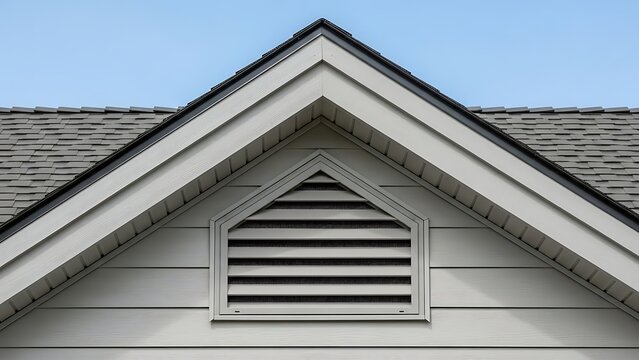
Gable vents are installed on the triangular end walls of your attic. They can work alongside other ventilation components to improve airflow, though they're generally less effective as a standalone ventilation solution compared to properly balanced soffit-and-ridge systems.
At TM Roofing & Construction Group, attic ventilation is always part of our comprehensive roof inspection process. When we inspect a DFW home's roof, we don't just look at the shingles on the outside — we assess the attic ventilation system as part of a complete picture of your roof's health.
Here's what we do:
We inspect your current ventilation setup, identify any blocked, missing, or undersized vents, and assess whether your intake and exhaust ventilation are properly balanced for your home's size and roof design. We provide clear, honest recommendations — whether that means adding soffit vents, installing a ridge vent along the full length of your ridge, or recommending a powered attic ventilator for additional cooling capacity.
And because attic ventilation is often damaged in DFW hailstorms — roof vents and ridge caps are particularly vulnerable to hail impacts — we include ventilation assessment as part of every storm damage inspection and help you ensure that ventilation upgrades are included in your insurance claim scope when applicable.
How do I know if my attic has enough ventilation?
The general standard is one square foot of net free ventilation area for every 150 square feet of attic floor space, balanced equally between intake and exhaust. The only reliable way to know whether your system meets this standard is a professional inspection.
Can poor attic ventilation void my roof warranty?
Yes. Most major shingle manufacturers require adequate attic ventilation as a condition of their material warranty. An improperly ventilated attic can void your warranty even on a recently installed roof.
Will improving attic ventilation lower my energy bills?
In DFW's climate, the answer is almost always yes. Properly ventilated attics reduce the heat load on your HVAC system during summer, which translates directly into lower cooling costs.
Does attic ventilation affect my entire home or just the roof?
Both. Attic ventilation affects your roof's lifespan, your energy efficiency, your indoor air quality, and the moisture levels throughout your home's structure. It's one of the most impactful systems in your entire house.

If your DFW home has high energy bills, prematurely aging shingles, or you simply haven't had your attic inspected recently — don't wait. Poor attic ventilation is a silent problem that compounds over time, and it's one of the most cost-effective things you can address to protect your roof and your home.
Schedule Your Free Inspection at asktmroofing.com
We love hearing from you, our team is always ready to chat with you!


